ISO 8501-1 defines blast-cleaning grades Sa 1, Sa 2, Sa 2½ and Sa 3, and hand or power tool grades St 2 and St 3. Sa 2½ (near-white metal, SSPC-SP 10 / NACE No. 2) is the most common grade for protective coatings on industrial steel. Cleanliness, surface profile, dust and soluble salts all need to be checked before coating.
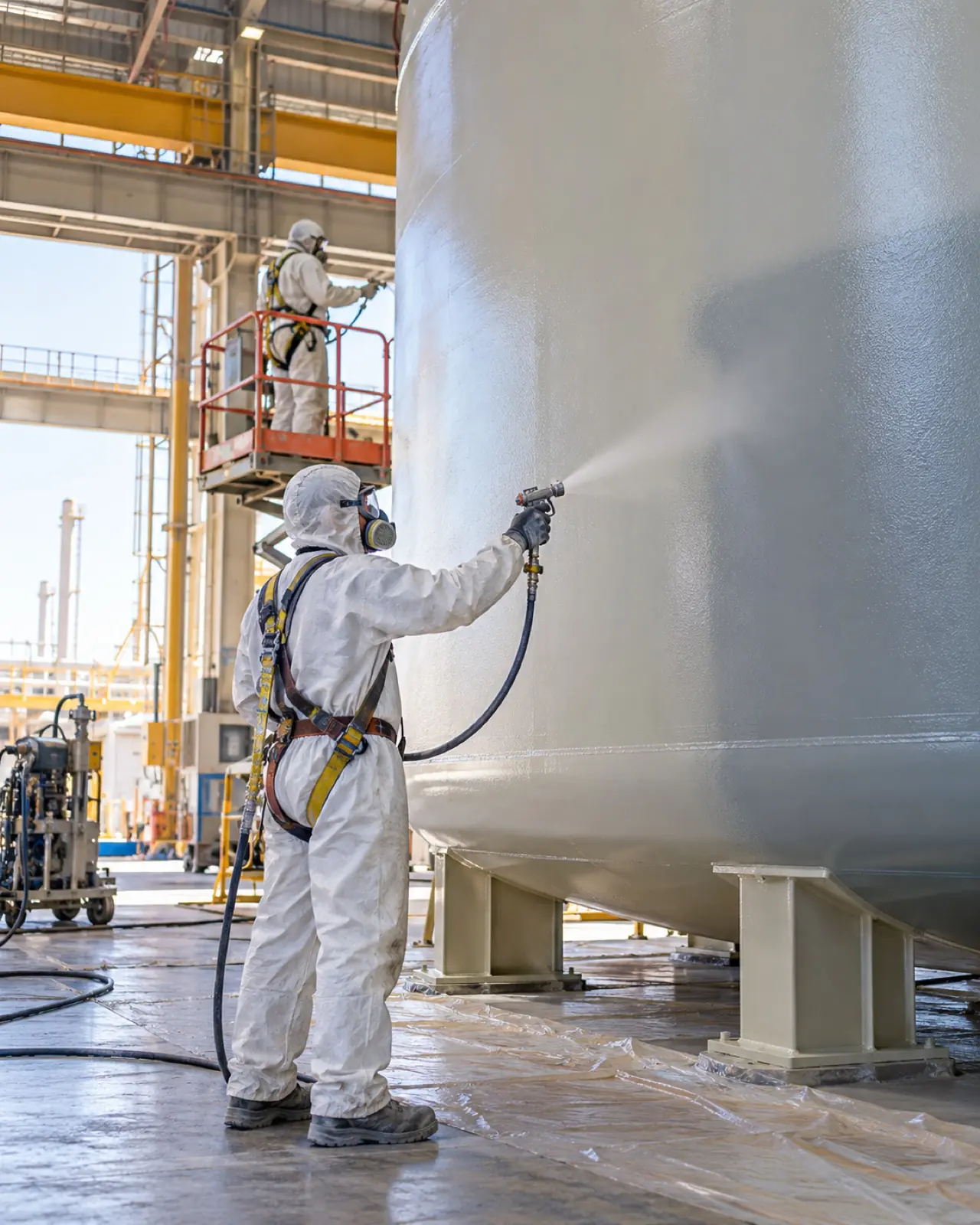
Why surface preparation matters
Surface preparation sets the steel condition required before a protective coating, and visual cleanliness is only part of acceptance. Review ISO 8501-1's visual grades, then align the profile, dust and salt checks with industrial painting and coating and qualified blast and coating trades before work starts.
Passing a visual grade is one checkpoint; profile, dust, soluble salts and weather conditions also affect coating readiness.
Sa 2½ vs SSPC-SP 10: surface-preparation grades
ISO 8501-1 describes visual grades with reference photographs. SSPC / NACE (now AMPP) standards use written definitions; the pairings below are common comparisons, not permission to substitute one project requirement for another. Follow the standard named in the specification.
| ISO 8501-1 | SSPC / NACE | Description |
|---|---|---|
| Sa 1 | SSPC-SP 7 / NACE No. 4 | Light (brush-off) blast cleaning: loose mill scale, rust and coating removed |
| Sa 2 | SSPC-SP 6 / NACE No. 3 | Thorough (commercial) blast cleaning: most mill scale, rust and coating removed |
| Sa 2½ | SSPC-SP 10 / NACE No. 2 | Very thorough (near-white) blast cleaning: only slight stains remain |
| Sa 3 | SSPC-SP 5 / NACE No. 1 | Blast cleaning to visually clean (white metal) steel: uniform metallic colour |
Hand and power tool cleaning
Where blasting is not possible, ISO 8501-1 defines St 2 (thorough hand and power tool cleaning) and St 3 (very thorough hand and power tool cleaning), broadly comparable to SSPC-SP 2 and SP 3. Power tool cleaning to bare metal is covered by SSPC-SP 11. These grades are usually used for touch-up and maintenance painting.
The starting condition: rust grades A to D
ISO 8501-1 also grades the steel before cleaning, from A (mostly intact mill scale) to D (rust with general pitting). The final appearance after blasting depends on this starting grade, so the reference photograph is written as, for example, "B Sa 2½".
Beyond cleanliness: profile, dust and salts
- Surface profile: the roughness created by blasting, measured with replica tape or comparators to ISO 8503. The coating system specifies a profile range.
- Dust: assessed with the tape test in ISO 8502-3 and removed by vacuum or clean, dry air.
- Soluble salts: measured with the Bresle method; see ISO 8502-6 and the applicable conductivity test. Salts are a real risk near the Red Sea and Gulf coasts.
- Climate: steel temperature must be at least 3 °C above the dew point, and humidity within the coating manufacturer's limits.
How Al Aitimad delivers coating work
Our industrial painting and coating service covers pipelines, tanks, structural steel and equipment to client and international specifications. Qualified blast and coating trades prepare the surface, and NACE / AMPP-certified inspectors check cleanliness, profile, salts and climate for handover.
Conclusion
What to take away
Agree on the specified cleanliness grade before work begins, then check the surface profile, dust, soluble salts and climate conditions before coating. Record the readings so inspection and handover can trace the result.
Continue to Industrial Painting & Coating